Canine Nutrition
Is what we feed our dogs actually killing them?
Dear Reader,
Let me first say that I am not a veterinarian. I am a professional dog trainer, dog mom, and an advocate
for feeding my dogs a healthy diet. In short, you will discover that my journey into canine nutrition began
with one very special dog, Sammy, that after a cancer diagnosis was given six weeks to live. Although
conventional medicine would unlikely confirm my experience as being viable, I will gladly inform you
that my dog survived his death sentence by 5 ½ years. He died at the age of 13 ½ and did not lose his life
to
Cancer

Sammy’s diet consisted of nothing but whole foods. Fresh organic meats and vegetables were the primary
source of his diet. I have provided Sammy’s cancer diet at the end of this article.
Ellen Carey, Greater Coastal Canine.
Yes, I do believe that in large what most feed our dogs could very well be killing them. This is an
unfortunate but true statement. No different from us, what we put inside our dogs bodies
is one of the most important factors in determining their health, wellbeing, and longevity.
I learned this fact the hard way from my own personal experience with my dog Sammy.
In brief, Sammy was my German shepherd. He was the love of my life, and one of the
reasons I became a professional dog trainer. At eight years old Sammy was diagnosed with
Hermangiosarcoma of the spleen, an aggressive cancer, with a bleak prognosis. I was
informed that Sammy had only six weeks left to live and that at the stage the cancer had
progressed, chemotherapy was not an option.

Once the blow of his diagnosis settled in, I became obsessed with understanding canine
cancer as a whole, and for those of you that have been down this road, we all know that a
whole lifetime of research will never be enough. However, I can share with you the one most
valuable piece of information that kept rearing its head in regards to cancer:
Commercial Dog Food; and the role it plays as a possible cause of cancer in our dogs. I also learned about
nutrition as a tool in the treatment of Canine Cancer. So began the journey: What was I really feeding
my dogs, and what was I going to change.
Prior to Sammy’s diagnosis, I always felt that feeding my dogs Pro Plan was a good food.
Like many of you, mass marketing, and good advertising led me to believe that Purina Pro
Plan was actually a healthy option for my dogs. Since the first ingredient was Chicken
than it had to be good. Needless to say, the more I learned the more I was not only
mortified, but quilt ridden as well. Was the dog food I was putting inside Sammy’s body, the
culprit that was ending his life?
For some of you reading this article, the information will not be news. However, my objective
is to offer usable information for those that are not aware of the health consequences of
feeding a poor commercial diet to their dogs.
Below is information obtained from years of research and fact finding. Books, vets, and the
internet all proved to be valuable resources. However, deciphering the information into usable
and practical knowledge was difficult. I have pulled from my notes, only the top layer of
information, that I felt most crucial for all health conscious dog owners. All resources are made
available as is a recommended reading list. 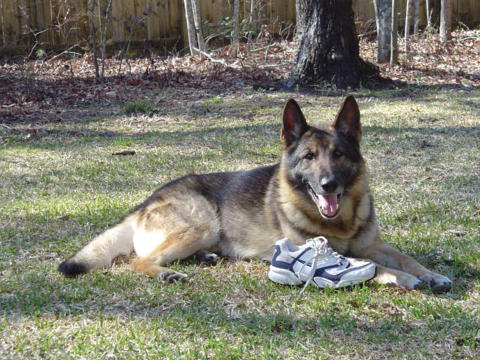
Go To Page 2 of 3
Dog training, puppy
training, dog obedience classes, pet manners classes,
clicker training classes, tricks classes, canine education, private dog
training, puppy socialization, in-home training, group
dog training classes,
kennel training, day training, board and train, pet first aid. Customized
behavior modification programs
for all dog behavior problems including house training, house soiling, dog
aggression, human aggression, nuisance barking,
children & dogs, destructiveness, chewing, digging, jumping on people,
jumping fences, multi-dog households, leash pulling,
separation anxiety, shyness, socialization, door bolting, running away,
hyperactive dogs, dog fighting, biting, growling,
anxiety biting, stress biting. Techniques incorporating positive
reinforcement! Training OBX Outer Banks,
Dog Training OBX Outer Banks, Training Kitty Hawk, Dog Training Kitty Hawk,
Training Currituck, Dog Training Currituck,
Training Kill Devil Hills, Dog training Kill Devil Hills, Training Nags Head,
Dog training Nags Head,
Dog Training Eastern North Carolina, Dog Training North Carolina, CGC training
& CGC testing, Dog training seminars,
Home Remodeling, Grooming, Dog Grooming, Dog day care, doggie day care,
Dog,